
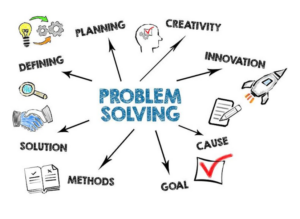
1. Root Cause Analysis (RCA)
- Identify the underlying cause of a problem using methods like the 5 Whys or fishbone diagrams.
- Focus on addressing the root cause instead of treating symptoms to prevent recurrence.
2. Brainstorming Sessions
- Bring together a diverse group of people to generate ideas collaboratively.
- Use techniques such as mind mapping or silent brainstorming to encourage creativity.
3. SWOT Analysis
- Analyze the Strengths, Weaknesses, Opportunities, and Threats related to the issue.
- This structured approach helps identify actionable solutions by leveraging strengths and opportunities.
4. Reverse Engineering
- Work backward from the desired solution to understand how to achieve it.
- This approach can reveal steps or components that might have been overlooked initially.
5. The SCAMPER Technique
SCAMPER is an acronym for creative thinking:
- Substitute: Replace parts of the problem with alternatives.
- Combine: Merge ideas or elements for a new solution.
- Adapt: Adjust existing solutions for this scenario.
- Modify: Change aspects like size, shape, or function.
- Put to another use: Repurpose existing resources creatively.
- Eliminate: Remove unnecessary components to simplify the issue.
- Reverse: Reimagine processes in reverse order.
6. Prototyping and Testing
- Build small-scale models or pilot programs to test potential solutions before full implementation.
- Use feedback from testing to refine your approach iteratively.
7. Decision Matrix Analysis
- List all possible solutions and evaluate them based on weighted criteria such as cost, feasibility, and impact.
- Assign scores and select the option with the highest total value.
8. Break Problems into Smaller Parts
- Divide complex problems into smaller, more manageable tasks (chunking).
- Solve each subproblem individually before integrating them into a larger solution.
9. Use Analogies for Insight
- Compare your problem with similar scenarios from other fields (e.g., nature, engineering).
- Draw parallels that may inspire innovative approaches.
10. Ask for Feedback from Outsiders
- Seek input from individuals who are not directly involved in the problem but have relevant expertise or fresh perspectives.
- This avoids “groupthink” and encourages unbiased opinions.
By automating repetitive tasks or analyzing data trends, technology can save time while offering actionable insights for solving problems effectively!
Recent Comments