
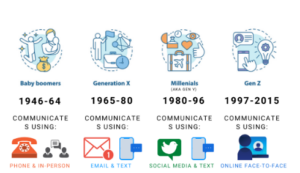
Communicating effectively with Millennials and Gen Z requires an understanding of their distinct characteristics, preferences, and the technological landscape they grew up in. Both generations are digital natives or early adopters, shaping their expectations for communication to be instant, authentic, and often visual.
Millennials (born roughly between 1981 and 1996) and Gen Z (born roughly between 1997 and 2012) share some common communication preferences but also exhibit key differences. Both generations value transparency, authenticity, and purpose-driven communication. They are accustomed to immediate feedback and expect communication to be a two-way street, fostering dialogue rather than one-sided directives. For Millennials, email remains a significant professional communication tool, often preferred for formal discussions and detailed information, though they are also adept with instant messaging platforms. They appreciate clear, concise messages and value work-life balance, which influences their communication patterns and expectations for responsiveness.
Gen Z, on the other hand, has an even stronger preference for visual communication and short-form content. Platforms like TikTok, Instagram, and Snapchat are integral to their daily interactions, leading to a preference for video messages, emojis, and memes in both personal and professional contexts. They are highly adept at multitasking and consuming information quickly, often preferring bite-sized content over lengthy documents.
Gen Z also places a high value on social impact, and their communication often reflects these values, seeking out brands and organizations that align with their ethical stances. They are more likely to use collaborative tools and instant messaging for quick exchanges and project updates, sometimes even preferring these over email for speed and efficiency. Both generations are comfortable with remote work and digital collaboration, making virtual communication tools essential for engagement. Understanding these nuances is crucial for effective communication strategies, whether in marketing, internal communications, or interpersonal interactions.














Recent Comments