
Empathy and Insight through Deep Listening
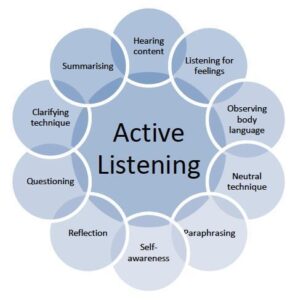
Here are some creative and well-thought-out logical ideas that illustrate how a coach listens deeply, helping you process challenges with empathy and insight:
Ordered
- The Echo Chamber Effect: The coach acts as a reflective surface, echoing back the client’s own words and feelings in a slightly rephrased manner. This allows the client to hear their own thoughts from an external perspective, often revealing new nuances or contradictions they hadn’t noticed.
- Example: “It sounds like you’re feeling a strong pull towards change, but also a significant fear of the unknown. Is that a fair summary of your internal conflict?”
- The Unspoken Word Detective: Beyond what is said, the coach pays close attention to pauses, tone shifts, body language, and what is not being said. This deep listening helps them identify underlying emotions or unspoken concerns that the client may not even be consciously aware of.
- The Metaphor Unpacker: When a client uses a metaphor (e.g., “I feel like I’m drowning,” “It’s an uphill battle”), the coach doesn’t just acknowledge it. They gently unpack the metaphor, asking questions that explore its deeper meaning and implications for the client’s challenge, revealing insights.
- The Emotional Compass: The coach acts as an emotional compass, helping the client identify, name, and understand the core emotions driving their challenges. This goes beyond surface-level feelings to pinpoint deeper emotional roots.
- The Pattern Recognizer: Through consistent deep listening over multiple sessions, the coach begins to identify recurring patterns in the client’s thoughts, behaviors, and emotional responses. Pointing out these patterns with empathy can be a profound catalyst for insight.
- The “What Else?” Provoker: Rather than accepting the first answer, the coach uses open-ended questions like “What else is coming up for you?” or “Is there anything else you’d like to share about that?” to encourage deeper exploration and uncover hidden layers of the challenge.
- The Future-Pacing Listener: While listening to current challenges, the coach also subtly listens for glimmers of the client’s desired future state or values. They then gently connect the current challenge to these aspirations, providing motivation and direction.
- The Silence Holder: The coach understands the power of silence. They create a safe space for the client to pause, reflect, and gather their thoughts without feeling pressured to fill the void. This allows for deeper processing and genuine insights to emerge.
- The Perspective Shifter: After deep listening, the coach can offer a gentle reframe or alternative perspective on the client’s challenge, not to dictate, but to broaden their understanding and open up new possibilities for solutions.
- The Strengths Spotter: Even when a client is focused on their struggles, the coach listens deeply for instances of resilience, past successes, or inherent strengths. They then reflect these observations back to the client, building self-efficacy and a more balanced view of their capabilities.
- The Core Belief Investigator: Through empathetic questioning and attentive listening, the coach helps the client uncover limiting core beliefs that might be contributing to their challenges. This involves listening for repeated negative self-talk or assumptions.
- The Values Aligner: The coach listens not just to the problem, but to the client’s deepest values and what truly matters to them. They then help the client see how their challenge might be misaligned with these values, or how aligning with them can provide a path forward.
- The Accountability Partner (through listening): By deeply listening to the client’s commitments and aspirations, the coach subtly becomes an accountability partner. Their attentive recall of previous discussions helps the client stay on track and reflect on their progress.
- The “What If…?” Explorer: After understanding the current challenge, the coach can, with empathy, pose “what if” scenarios. This isn’t about solving, but about exploring potential outcomes or alternative approaches in a safe, hypothetical space, fostering creative problem-solving.
- The Narrative Reshaper: The coach listens to the client’s personal narrative around their challenge. Through insightful questions and empathetic reflection, they help the client identify disempowering elements of their story and collaboratively reshape it into a more empowering and proactive narrative.














Recent Comments