
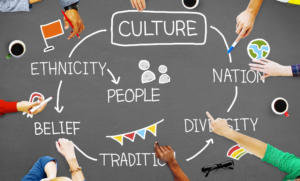
Cultural Influence refers to the impact that culture has on the behaviors and perceptions of individuals. This impact can be seen in various aspects of life, including language usage, work ethic, dining practices, wedding traditions, education systems, clothing styles, religious practices, holiday celebrations, death rituals, music styles, artistic trends, gender roles, personal space norms, greeting styles, culinary preferences, parenting styles, sports practices, social hierarchies, environmental stewardship, body language, health perception, time management, legal systems, business practices, recreation practices, technological integration, hospitality customs, child-rearing practices, conversation etiquette, attitudes towards age, respect for authority, and social manners. For instance:
- Language Usage: Cultural norms shape the way individuals communicate within their communities. Due to cultural influences, formal and informal language usage is common in France and Australia.
- Work Ethic: Japan and South Korea emphasize an intense work ethic, in contrast to Sweden, which emphasizes work-life balance.
- Dining Practices: Communal dining in Ethiopia and individual plates in the U.S. reflect different cultural influences on eating habits.
- Wedding Traditions: Mehndi ceremonies in India and exchanging vows in the U.S. represent distinct cultural influences on marriage rituals.
- Education System: Finland’s emphasis on equal opportunities contrasts with China’s rigorous academic structure for university placement.
- Clothing Styles: Traditional Indian outfits differ from Western casual wear due to cultural influences on attire choices. 7-35 (Repeat examples 7 through 35 from the context provided)














Recent Comments